
AI is related to mental health risks in surprising ways. Discover 7 proven insights on how artificial intelligence impacts stress, anxiety, and emotional well-being.
Table of Contents
- Introduction: AI is related to mental health risk
- AI and Mental Health: The Connection
- Positive Impacts of AI on Mental Health
- Risks and Challenges AI Brings to Mental Health
- Personal Story: When AI Became Overwhelming
- AI and Mental Health Risk Factors – Quick Comparison Table
- How to Reduce AI-Related Mental Health Risks
- FAQs on AI and Mental Health Risks
- Conclusion: Navigating AI’s Mental Health Impact
Introduction: AI is related to mental health risk
Artificial intelligence is everywhere—recommendation engines, chatbots, workplace automation, and even mental health apps. But with this rapid integration, one big question arises: Is AI is related to mental health risk?
The answer is yes. While AI provides opportunities for support, it can also increase risks like stress, anxiety, social isolation, and digital dependency. Understanding this balance is critical for protecting our well-being in the digital age.
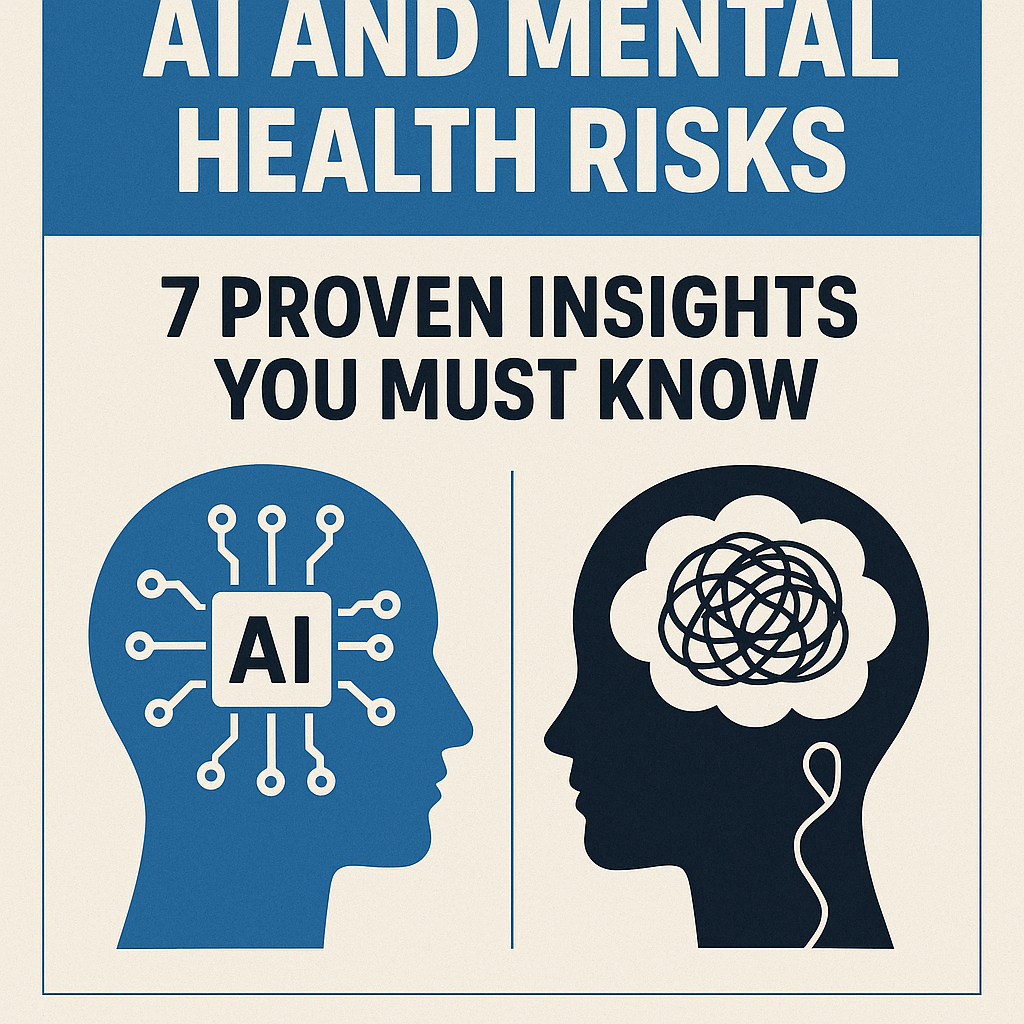
AI is related to mental health risk: The Connection
AI is related to mental health risk in two major ways:
- Directly, through tools like AI-driven therapy apps, chatbots, and diagnostic systems.
- Indirectly, by shaping online behavior via algorithms that affect mood, attention, and stress.
For example, AI-curated social feeds often amplify negative news, which can worsen anxiety and depression. At the same time, AI-based mindfulness apps can help reduce stress.
👉 According to a World Health Organization report, mental health issues are rising globally. Technology—including AI—plays a dual role. It acts as both a helper and a risk factor.
Positive Impacts of AI on Mental Health
AI isn’t all risk. It has notable benefits:
- AI therapy chatbots (like Woebot, Wysa) provide affordable, instant support.
- Personalized mental health apps track mood and suggest coping strategies.
- AI-powered early detection helps identify signs of depression and suicidal thoughts faster.
- Accessibility for remote areas where therapists are unavailable.
AI can be a bridge to mental health support when used responsibly.
Risks and Challenges AI Brings to Mental Health
AI Overuse and Digital Burnout
Constant exposure to AI-driven content (social media, news feeds, notifications) can cause information overload. It can also lead to screen fatigue, resulting in stress and poor sleep.
Algorithmic Bias and Emotional Harm
AI systems often reflect biases in their data. For example, biased recommendations can reinforce stereotypes or provide harmful health advice, creating emotional distress.
Privacy and Trust Issues
Mental health data is highly sensitive. If AI-driven platforms misuse or leak this data, it can increase anxiety, reduce trust, and cause long-term psychological harm.
👉 For deeper reading, see APA’s view on AI ethics.
Personal Story: When AI Became Overwhelming
A few months ago, I noticed I was spending hours scrolling through AI-curated feeds. Every “recommended” post kept me engaged but left me feeling anxious and drained.
At one point, I tried using an AI-driven sleep app. However, the constant tracking made me more stressed. I worried about whether I was sleeping enough.
This experience reminded me: AI is a tool, not a solution by itself. Balance and mindful usage are key to protecting our mental health and AI is related to mental health risks. Self Care and Wellness: 10 Proven Practices for a Healthier, Happier Life.
AI is related to mental health risk Factors – Quick Comparison Table
| Aspect | Positive Impact | Potential Risk |
|---|---|---|
| AI Therapy Chatbots | Affordable & 24/7 support | Lack of human empathy |
| Social Media Algorithms | Personalized content | Doomscrolling & anxiety |
| Workplace AI Tools | Productivity boost | Burnout & job stress |
| Health Data AI | Early diagnosis | Privacy & misuse risks |
How to Reduce AI-Related Mental Health Risks
Here are practical steps to stay safe:
- Set screen limits for social media and AI apps.
- Diversify your information sources instead of relying only on AI-curated feeds.
- Use AI tools as supplements, not replacements for real human connection.
- Check app privacy policies before sharing personal mental health data.
- Practice digital detox at least once a week.
Internal resource for more tips: Fit Mind India – Mental Health Blogs.

FAQs on AI and Mental Health Risks
1. Is AI related to increased anxiety?
Yes. AI-driven platforms can amplify stress by promoting addictive scrolling and exposure to negative content.
2. Can AI replace therapists?
No. AI can assist but cannot replace human empathy, deep understanding, and therapeutic expertise.
3. How does AI affect teenagers’ mental health?
Teens are more vulnerable to algorithmic influence, leading to higher risks of cyberbullying, low self-esteem, and social anxiety.
4. Is AI safe for mental health apps?
Safe if regulated and used with strong privacy protections. Always check app credibility.
5. How can I balance AI use and mental well-being?
Use AI tools for support, but set boundaries, take digital breaks, and prioritize real-life connections.
Conclusion: Navigating AI’s Mental Health Impact and AI is related to mental health risk
AI is related to mental health risks, but it also offers powerful tools for support. The key lies in awareness, balance, and responsible use.
If you feel AI-driven platforms are affecting your mood, take control. Limit screen time. Choose apps carefully. Seek professional help when needed.
👉 Call to Action: Want to learn more about maintaining mental well-being in a digital-first world? Visit Fit Mind India for expert blogs and practical guides.
The Future of AI is related to mental health risk
As artificial intelligence continues to evolve, its influence on mental health will only grow stronger. The key challenge is ensuring that innovation does not come at the cost of psychological well-being. Experts now agree that while AI is related to mental health risk, it also carries the potential to reshape how we approach therapy, diagnosis, and self-care.
The Double-Edged Sword of AI in Mental Health
AI-driven apps can analyze voice patterns, facial expressions, and even typing speed to detect early signs of depression or anxiety. This can be life-saving when interventions happen quickly. However, the same technology could also be misused by advertisers, employers, or governments, leading to discrimination or loss of trust.
For example, imagine an AI system detecting “stress” in a job applicant’s social media behavior and labeling them as unfit for a high-pressure role. While technically possible, such an application of AI could cause unnecessary stigma and worsen mental health outcomes.
Why Awareness Matters
One of the biggest reasons people suffer from technology-related stress is a lack of awareness. Many users don’t realize that their constant exposure to AI-curated feeds is shaping their moods, attention spans, and even sleep cycles. Being conscious of these effects allows individuals to make informed choices—such as setting screen-time limits or using digital detox strategies.
The Role of Policy and Regulation
Governments and organizations must step in to create ethical guidelines for AI in healthcare. Regulations that enforce transparency, data security, and unbiased algorithms can reduce many of the risks we face today. For instance, the European Union’s AI Act already proposes strict measures to prevent AI misuse in sensitive areas like mental health.
Until stronger laws are globally adopted, users should remain vigilant about the platforms they trust with personal data.
Balancing Human Connection and AI Tools
Perhaps the most important reminder is this: AI can assist but not replace human empathy. Talking to a supportive friend, family member, or licensed therapist is still far more impactful than any chatbot or app. AI tools should be seen as bridges to support, not substitutes for genuine human interaction.
✨ Takeaway: The relationship between AI is related to mental health risk is complex. It’s not about rejecting AI but about using it wisely—as a tool that empowers rather than controls us. By blending technology with mindfulness, we can enjoy the benefits of AI while safeguarding our emotional health.